Assessment in 5th GradeAssessment in 5th Grade
I recently read an article provided by our superintendent about meaningful assessment. The link to the article is below. Here are some main points from the article that relate to what we’re doing in the classroom.
In the 5th grade we are using the Common Core State Standards to create units of study. We begin our unit design with what we want our students to be able to do. Then we plan an assessment that allows students to use their skills and knowledge to show and apply their learning. According to the article these performance tasks are the heart of the curriculum.
“This performance-based conception of standards lies at the heart of what is needed to translate the Common Core into a robust curriculum and assessment system. The curriculum and related instruction must be designed backward from an analysis of standards-based assessments; i.e., worthy performance tasks anchored by rigorous rubrics and annotated work samples.”
As a 5th grade team we are creating rubrics, performance tasks, and a summative assessment to document your student’s growth. Our hope is that students are learning skills they can apply to any context, content, or situation. They are learning skills that are preparing them for life.
“Indeed, the whole point of Anchor Standards in ELA and the Practices in Mathematics is to establish the genres of performance (e.g., argumentation in writing and speaking, and solving problems set in real-world contexts) that must recur across the grades in order to develop the capacities needed for success in higher education and the workplace.”
Students are working through problems together throughout the day and determining their own answers and solutions. They have the space to be creative, problem solve, and think critically. I keep track of their learning informally through observations, the work in their notebooks, conversations we have, and any writing they produce. Your students are given the opportunity on multiple occasions to show their progress and understanding towards any one standard.
This deep and rigorous learning does not consist of as many traditional worksheets or stand alone (multiple choice or fill in the blank) tests. However, besides informal assessments there are periodic formal assessments and check-in’s to document student growth and learning. Usually the students aren’t told about them before hand but rather it’s a way to get evidence of a student’s learning at a particular moment and then used by the teacher to guide future instruction.
http://www.edutopia.org/blog/common-core-meaningful-assessment-jay-mctighe-grant-wiggins
If you’re looking to have a conversation with your student about their learning try asking them some of these questions:
-What strategies are you using in math right now?
-What community activities and games has your class been doing?
-What kinds of texts have you been reading and what have you been looking for when you read them?
-What investigations have you been doing in the afternoon?
-What kind of writing have you been doing?
Use your student’s interests and answers to these questions to help you understand what your student’s interests and abilities are in school. Then let those conversations help influence any work you do at home with your student.
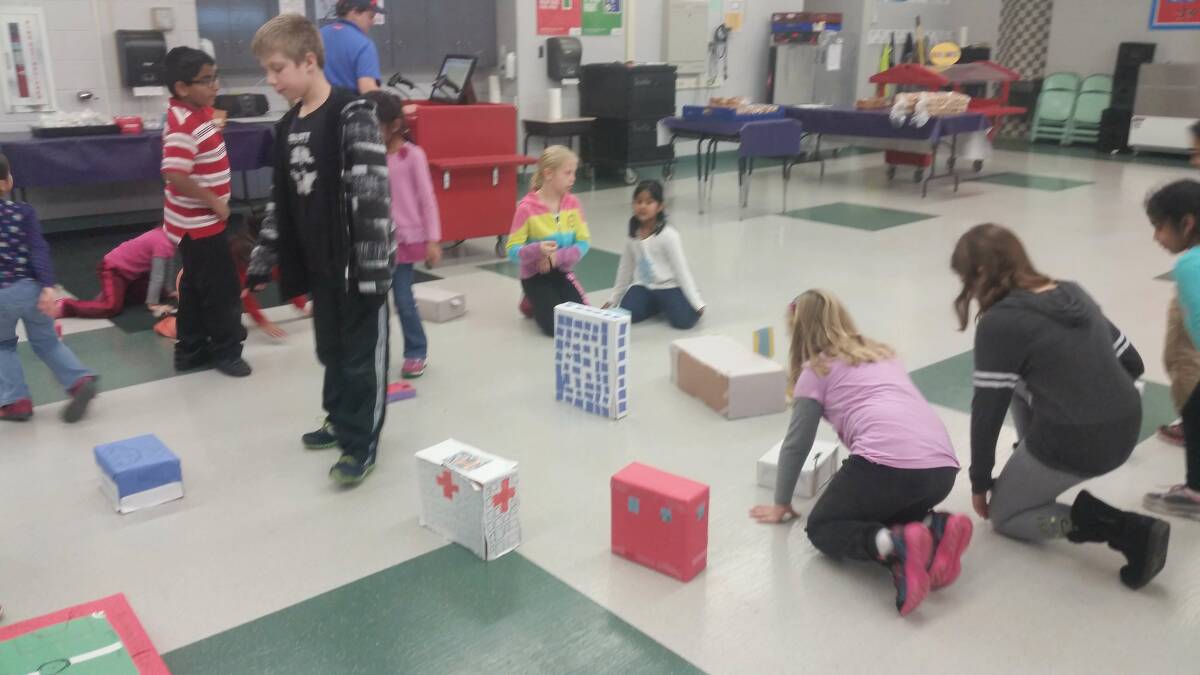
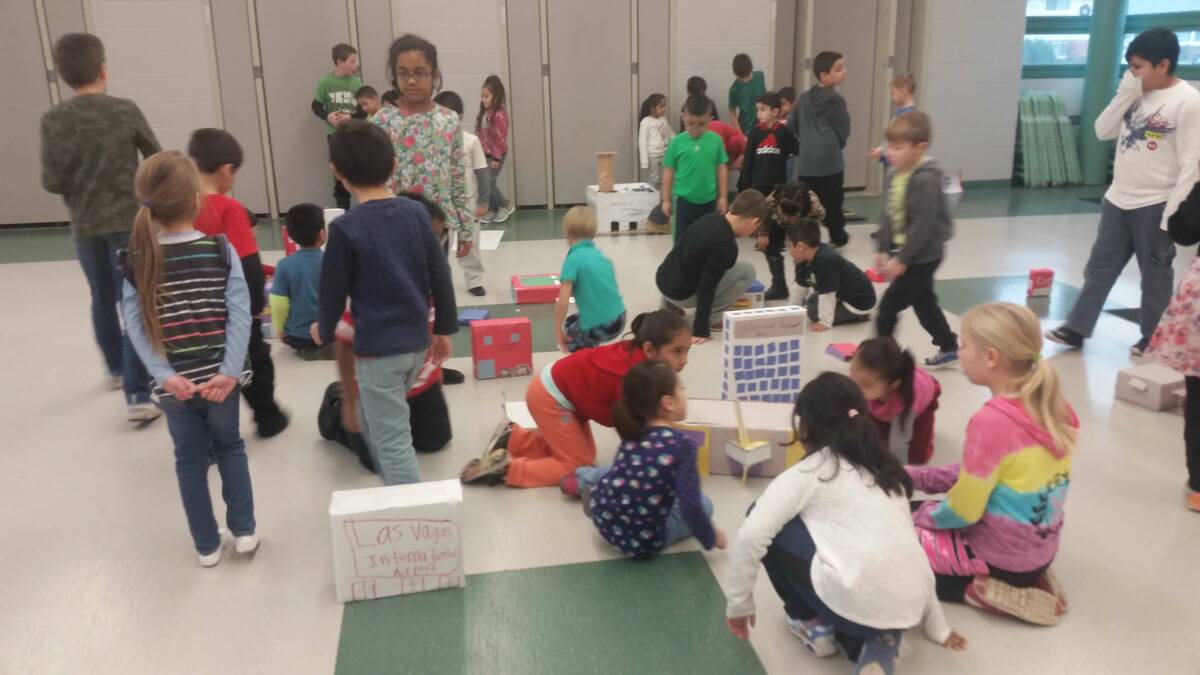
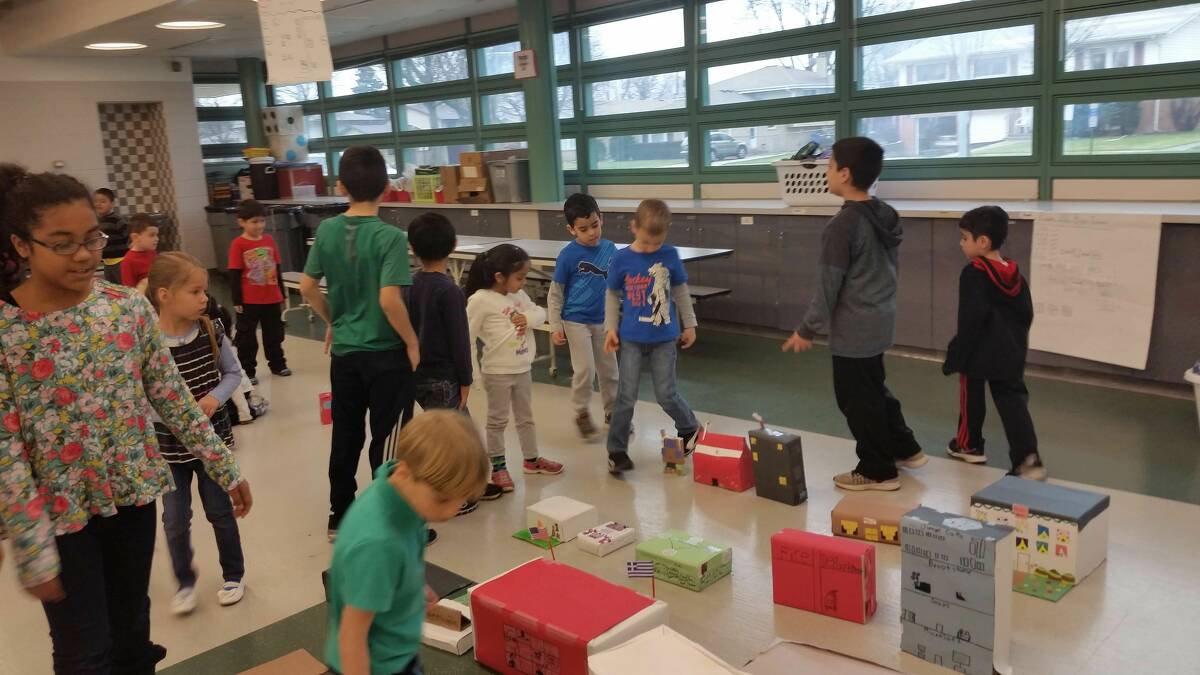
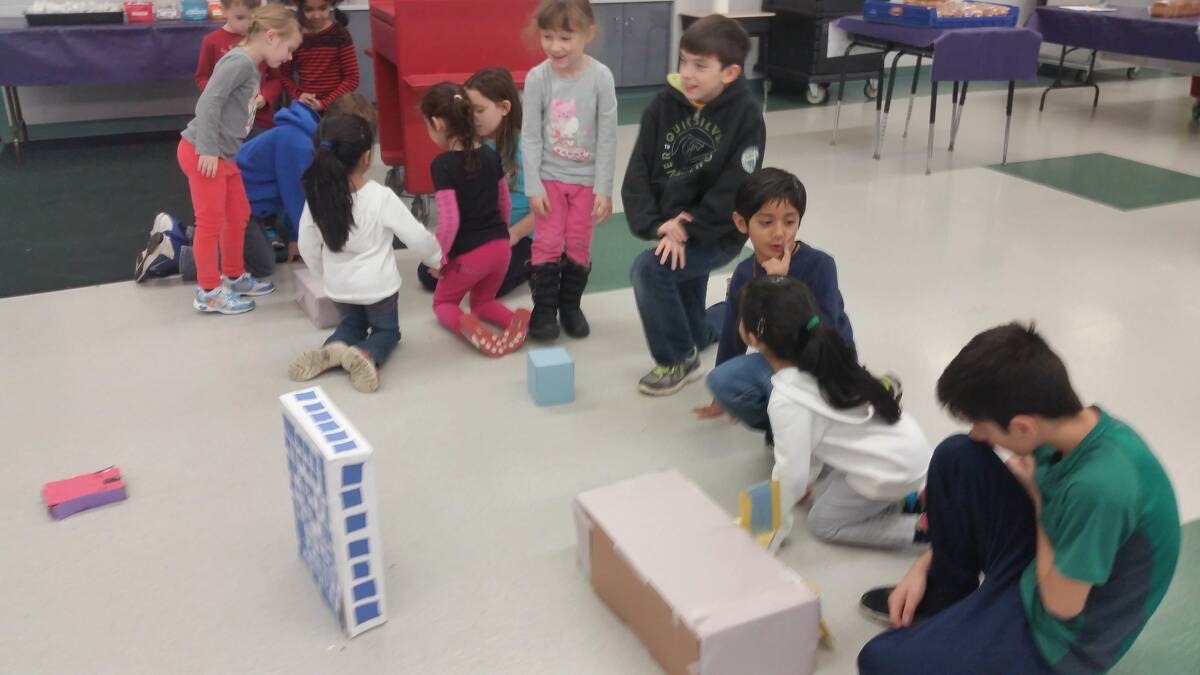
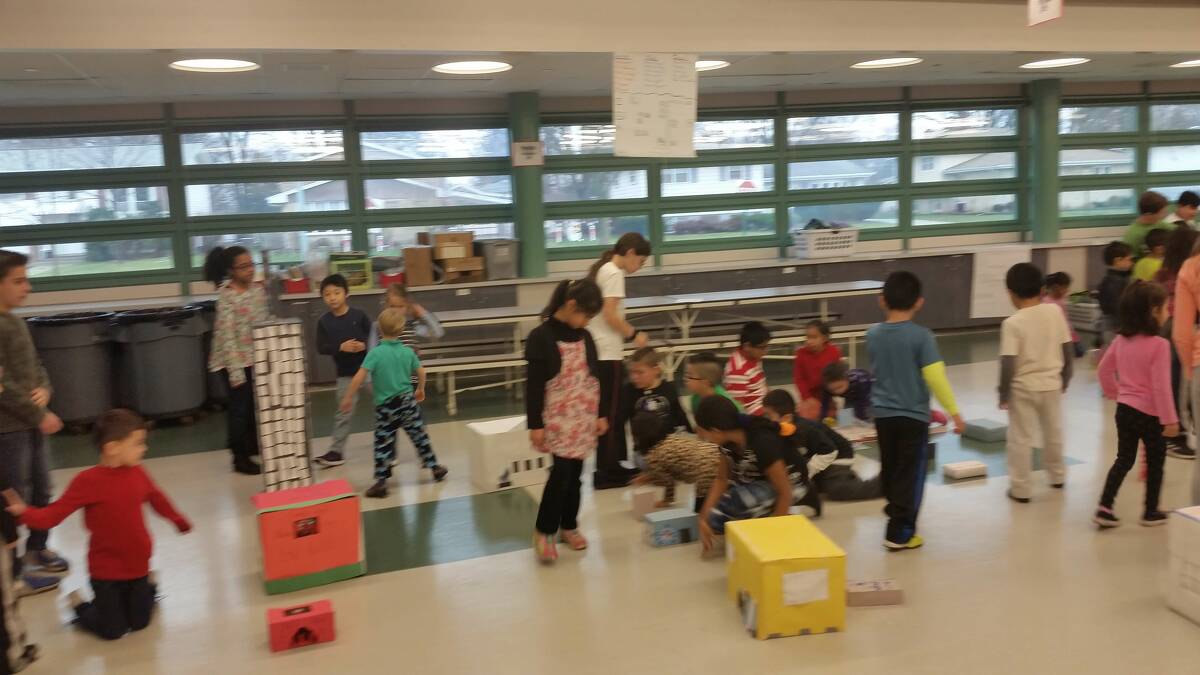
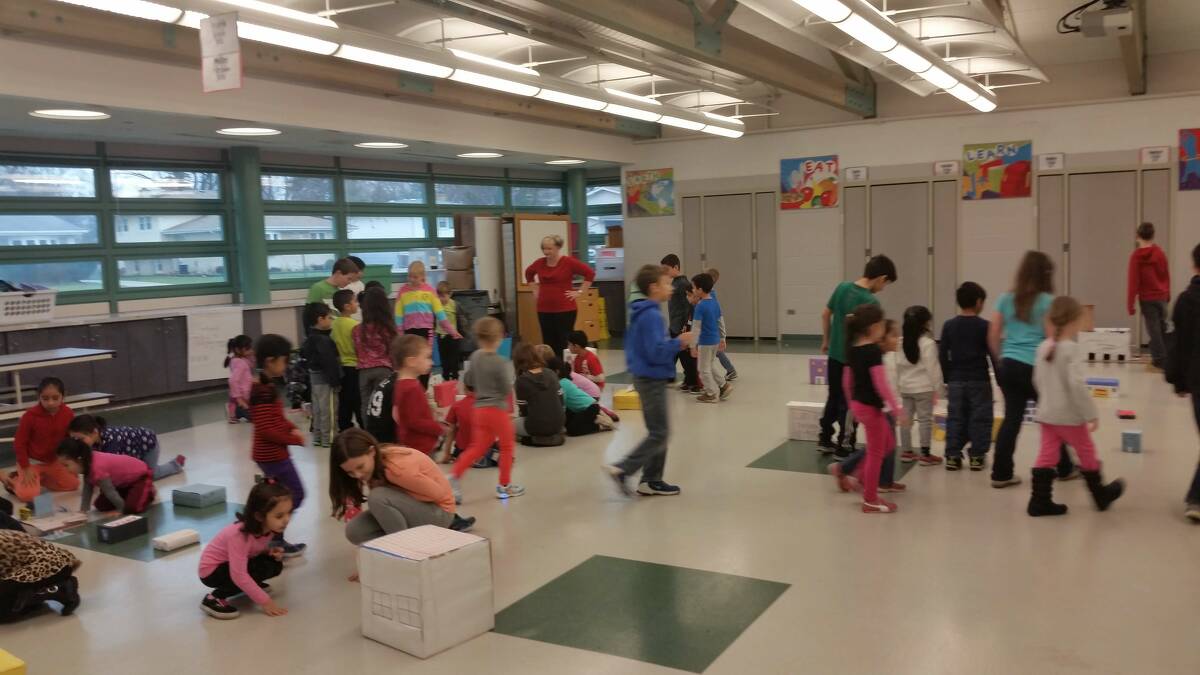
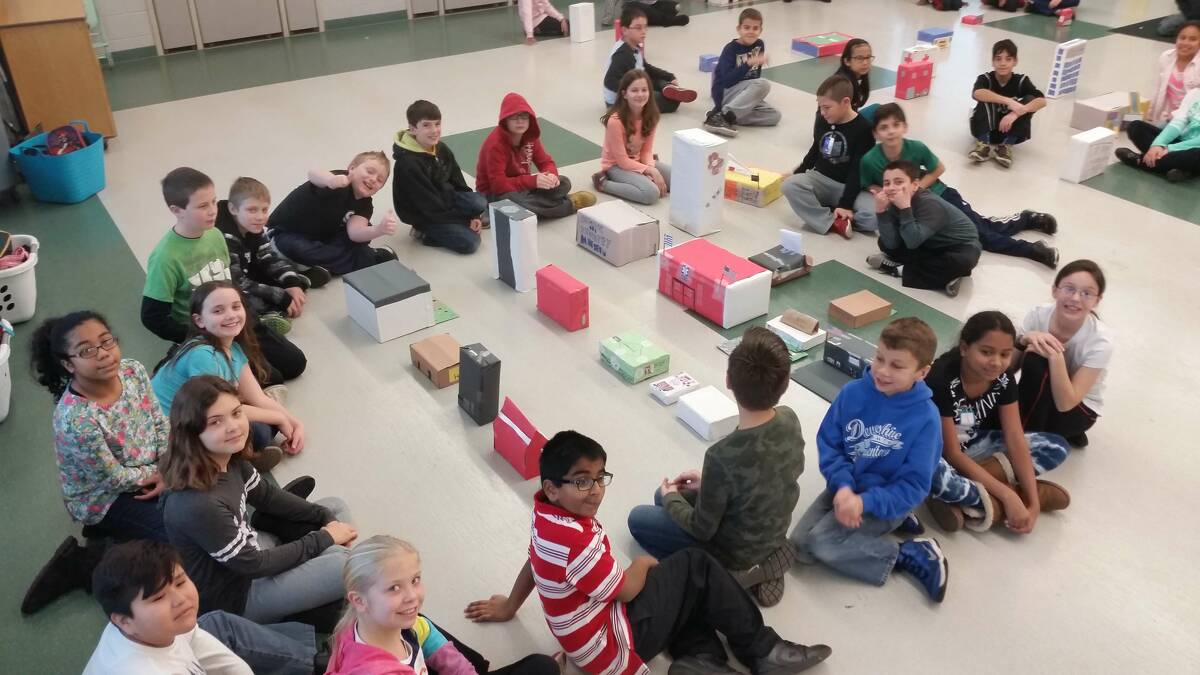
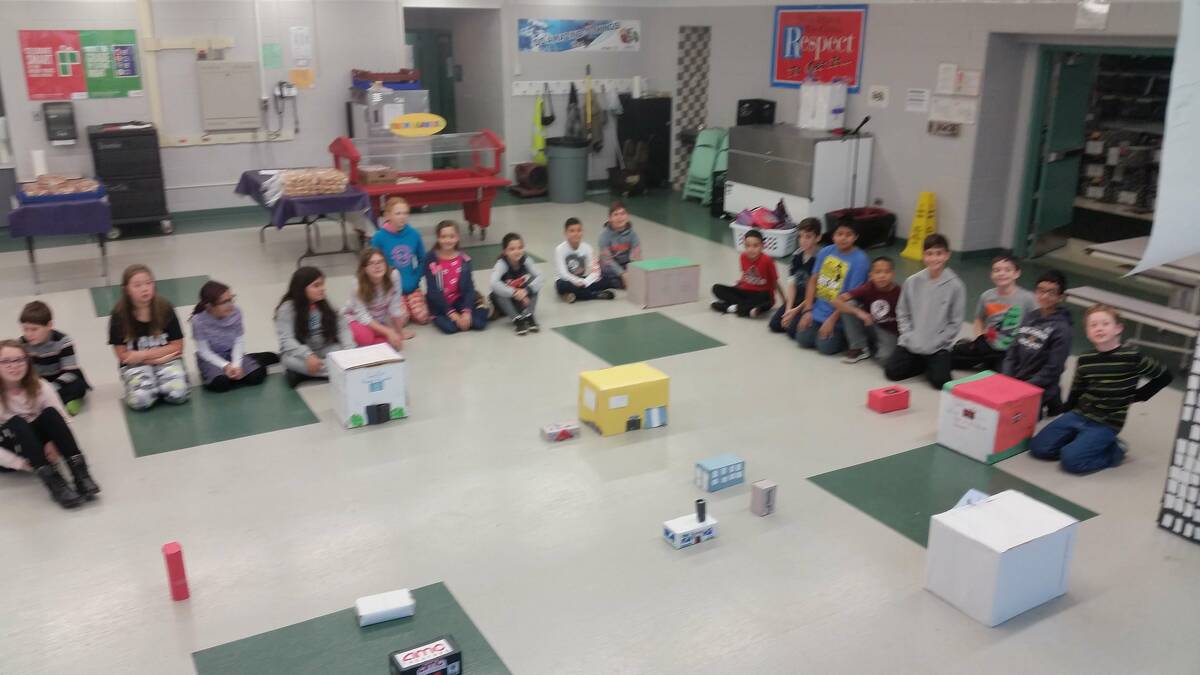
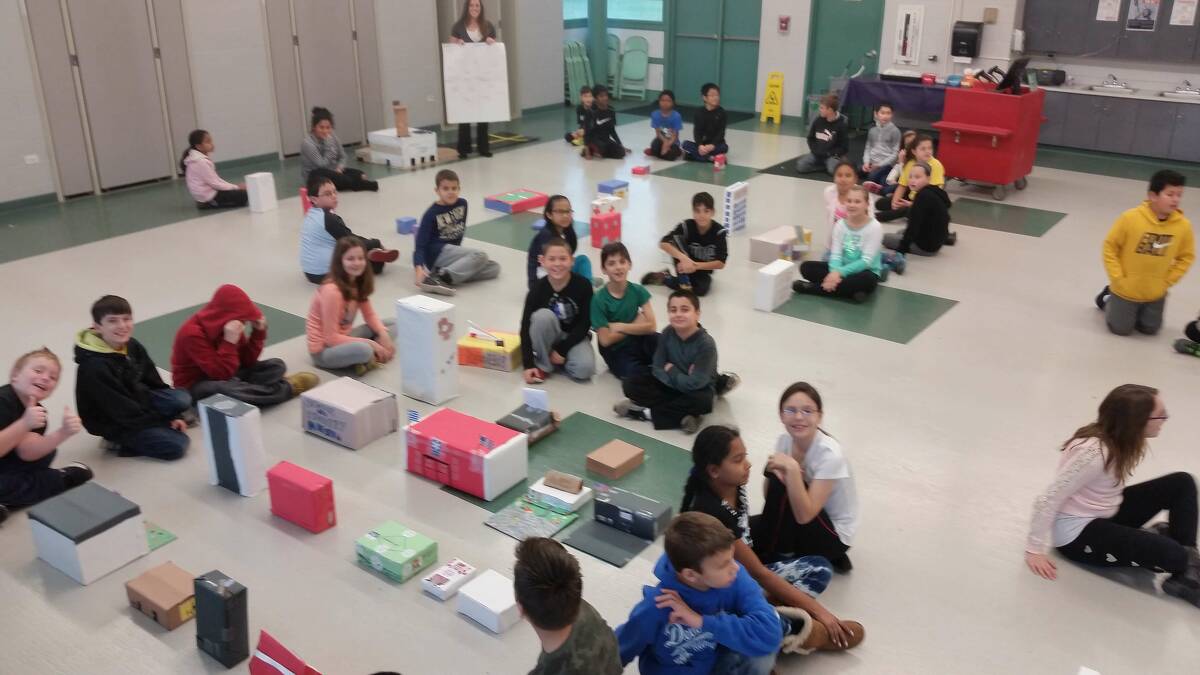
Below are photos from our volume unit assessment where students created a 3d town of boxes. The collaboration process included:
-deciding which buildings were important to a community
-determining the size buildings should be compared to one another (small, medium, or large)
-splitting the work load as a small group
-estimating the volumes of boxes to ensure they fit within the size requirements
-purchasing the box with pretend money
-finding the volume of box, checking size requirements, then buying a Devonshire Building Permit
-filling out the permit and having a classmate inspector check measurements
-paying an inspector and having a city council member (teacher) sign off on the permit
-decorating boxes realistically to fit the community’s need
After the students were complete with their buildings, small groups came together to assemble the town; taking into consideration which buildings should be where for the ease and safety of community members.
We found the total volume of all our buildings and then set our town up alongside Ms. Spenn’s and Mr. Rowley’s towns. The other classes in our school spent the afternoon visiting our towns. Students gave tours to the younger students and answered their questions.
I recently read an article provided by our superintendent about meaningful assessment. The link to the article is below. Here are some main points from the article that relate to what we’re doing in the classroom.
In the 5th grade we are using the Common Core State Standards to create units of study. We begin our unit design with what we want our students to be able to do. Then we plan an assessment that allows students to use their skills and knowledge to show and apply their learning. According to the article these performance tasks are the heart of the curriculum.
“This performance-based conception of standards lies at the heart of what is needed to translate the Common Core into a robust curriculum and assessment system. The curriculum and related instruction must be designed backward from an analysis of standards-based assessments; i.e., worthy performance tasks anchored by rigorous rubrics and annotated work samples.”
As a 5th grade team we are creating rubrics, performance tasks, and a summative assessment to document your student’s growth. Our hope is that students are learning skills they can apply to any context, content, or situation. They are learning skills that are preparing them for life.
“Indeed, the whole point of Anchor Standards in ELA and the Practices in Mathematics is to establish the genres of performance (e.g., argumentation in writing and speaking, and solving problems set in real-world contexts) that must recur across the grades in order to develop the capacities needed for success in higher education and the workplace.”
Students are working through problems together throughout the day and determining their own answers and solutions. They have the space to be creative, problem solve, and think critically. I keep track of their learning informally through observations, the work in their notebooks, conversations we have, and any writing they produce. Your students are given the opportunity on multiple occasions to show their progress and understanding towards any one standard.
This deep and rigorous learning does not consist of as many traditional worksheets or stand alone (multiple choice or fill in the blank) tests. However, besides informal assessments there are periodic formal assessments and check-in’s to document student growth and learning. Usually the students aren’t told about them before hand but rather it’s a way to get evidence of a student’s learning at a particular moment and then used by the teacher to guide future instruction.
http://www.edutopia.org/blog/common-core-meaningful-assessment-jay-mctighe-grant-wiggins
If you’re looking to have a conversation with your student about their learning try asking them some of these questions:
-What strategies are you using in math right now?
-What community activities and games has your class been doing?
-What kinds of texts have you been reading and what have you been looking for when you read them?
-What investigations have you been doing in the afternoon?
-What kind of writing have you been doing?
Use your student’s interests and answers to these questions to help you understand what your student’s interests and abilities are in school. Then let those conversations help influence any work you do at home with your student.
Below are photos from our volume unit assessment where students created a 3d town of boxes. The collaboration process included:
-deciding which buildings were important to a community
-determining the size buildings should be compared to one another (small, medium, or large)
-splitting the work load as a small group
-estimating the volumes of boxes to ensure they fit within the size requirements
-purchasing the box with pretend money
-finding the volume of box, checking size requirements, then buying a Devonshire Building Permit
-filling out the permit and having a classmate inspector check measurements
-paying an inspector and having a city council member (teacher) sign off on the permit
-decorating boxes realistically to fit the community’s need
After the students were complete with their buildings, small groups came together to assemble the town; taking into consideration which buildings should be where for the ease and safety of community members.
We found the total volume of all our buildings and then set our town up alongside Ms. Spenn’s and Mr. Rowley’s towns. The other classes in our school spent the afternoon visiting our towns. Students gave tours to the younger students and answered their questions.